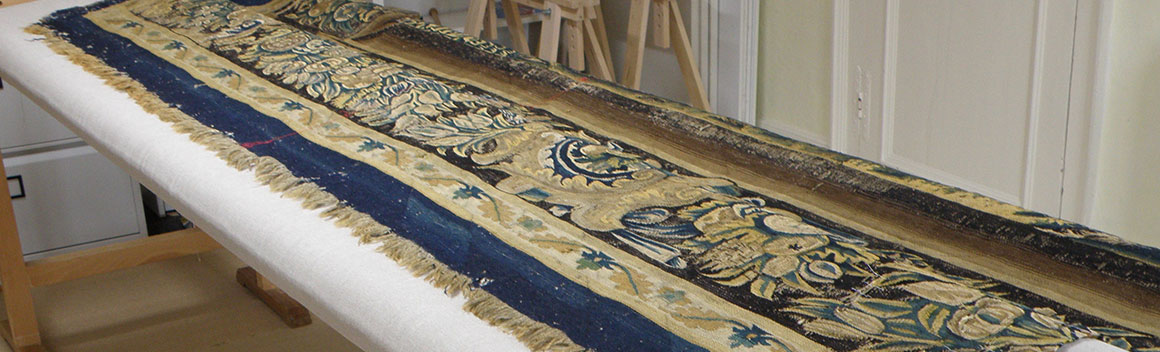
What is textile conservation?

Textile conservation differs from restoration. It aims to preserve the surviving textile, to improve and stabilise the condition, rather than removing elements of the old textile and replacing with new.
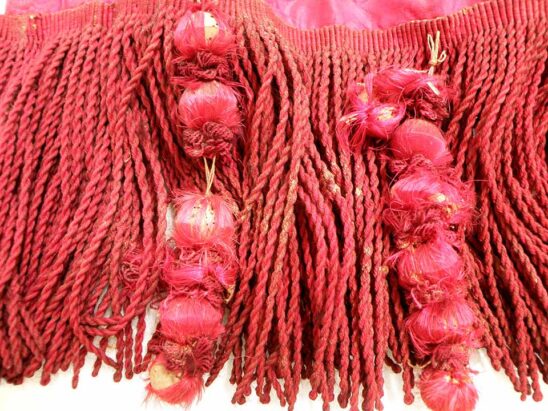
Faded colours have undergone a chemical process and cannot be ‘brought back’.
However, it is usually possible to improve the overall condition and appearance of even the most sorry looking item!
Cleaning
There are various methods of cleaning, most often starting with surface cleaning, followed by either wet-cleaning or solvent cleaning using techniques developed through training and experience in the profession.
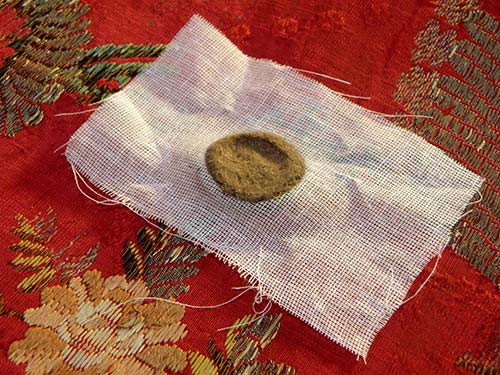
Sample of dust during testing of surface cleaning by vacuum suction 
Chintz case cover during wet cleaning in washing solution
Support
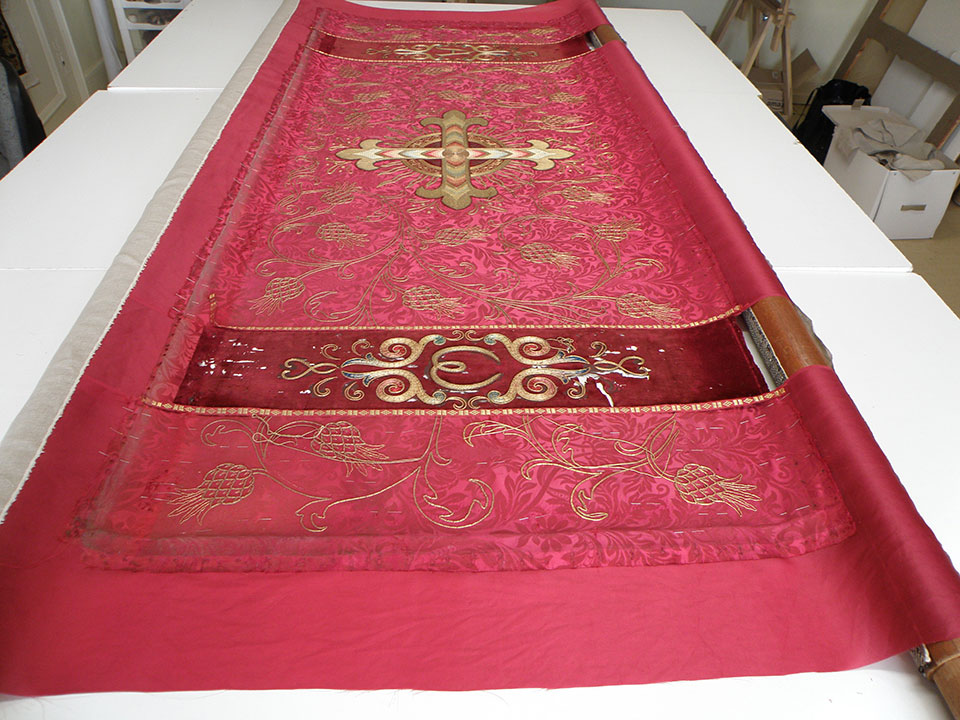
Textiles needing repair and conservation are invariably weakened. Typically, they have deteriorated, lost structure and strength and require some sort of support to carry their own weight. New fabrics are used to provide a structural ‘support’ or backing behind the textile and all stitching repairs are carried out through to this support. The choice and preparation of the support fabric is critical to achieving the best results.
The new fabric support may have to be dyed a sympathetic colour to blend in with the faded colours of the object, in order to make it as unobtrusive as possible. Synthetic chemical dyes are used, rather than natural dyes, because of their excellent properties of non-fading and stability.
Adhesive supports are less common but may be recommended as the most suitable and sometimes the only treatment, usually where stitching would only cause further damage to a friable textile and where some sort of substructure is necessary.
Display
Once supported, the textile is ready to be prepared for display. This may involve mounting it onto a covered acid-free board in readiness for framing or, for example, applying Velcro tape onto the reverse at the heading of a tapestry to enable it to hang safely with an even distribution of weight.
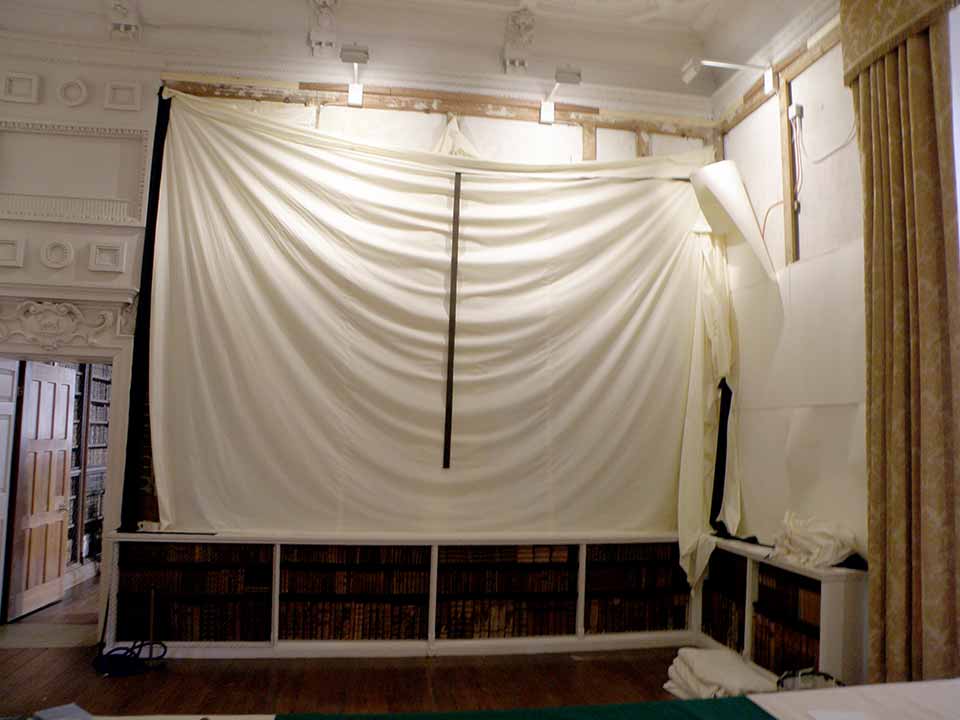

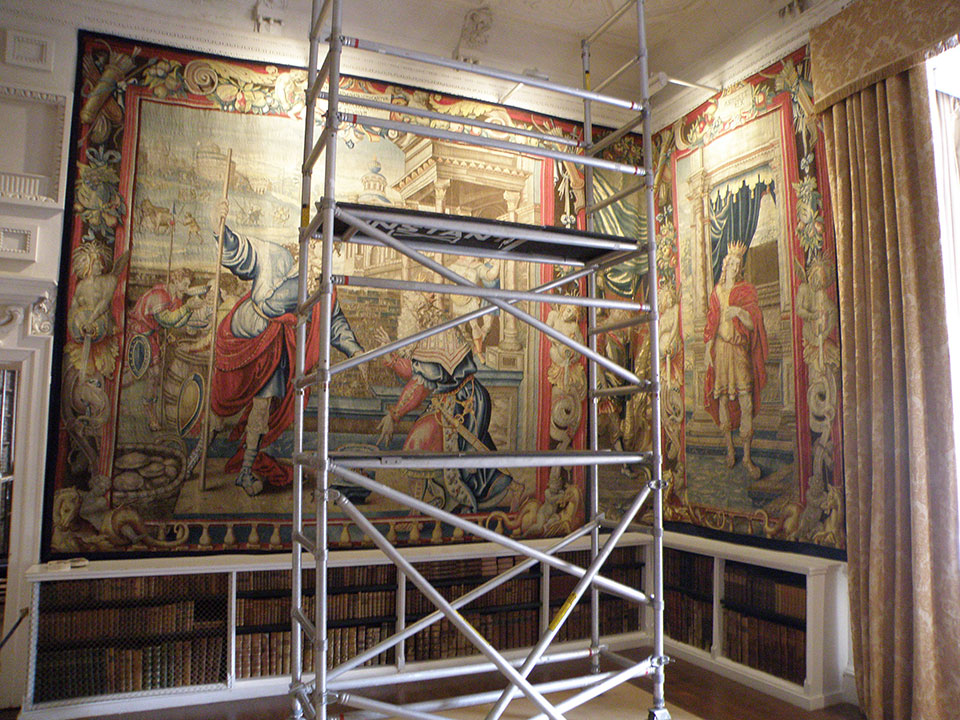
Textile conservation is a very rewarding process. Each object is unique and has its own specific problems and requirements, which can be challenging.
Fortunately, conservators like a challenge and part of the appeal is ‘how do we solve the problem to achieve the best result’? This is where my experience and skills come in. An initial close inspection and condition assessment will highlight what is needed and enable me to offer advice. The client will receive a treatment proposal, with possible options, together with an estimate, based on an hourly rate. All work is carried out to the highest standards, with the client being involved in any decisions that are necessary as the work progresses.
Conservation treatment is often very subtle but it can produce dramatic ‘before’ and ‘after’ results.


